
 Image 1 of 2
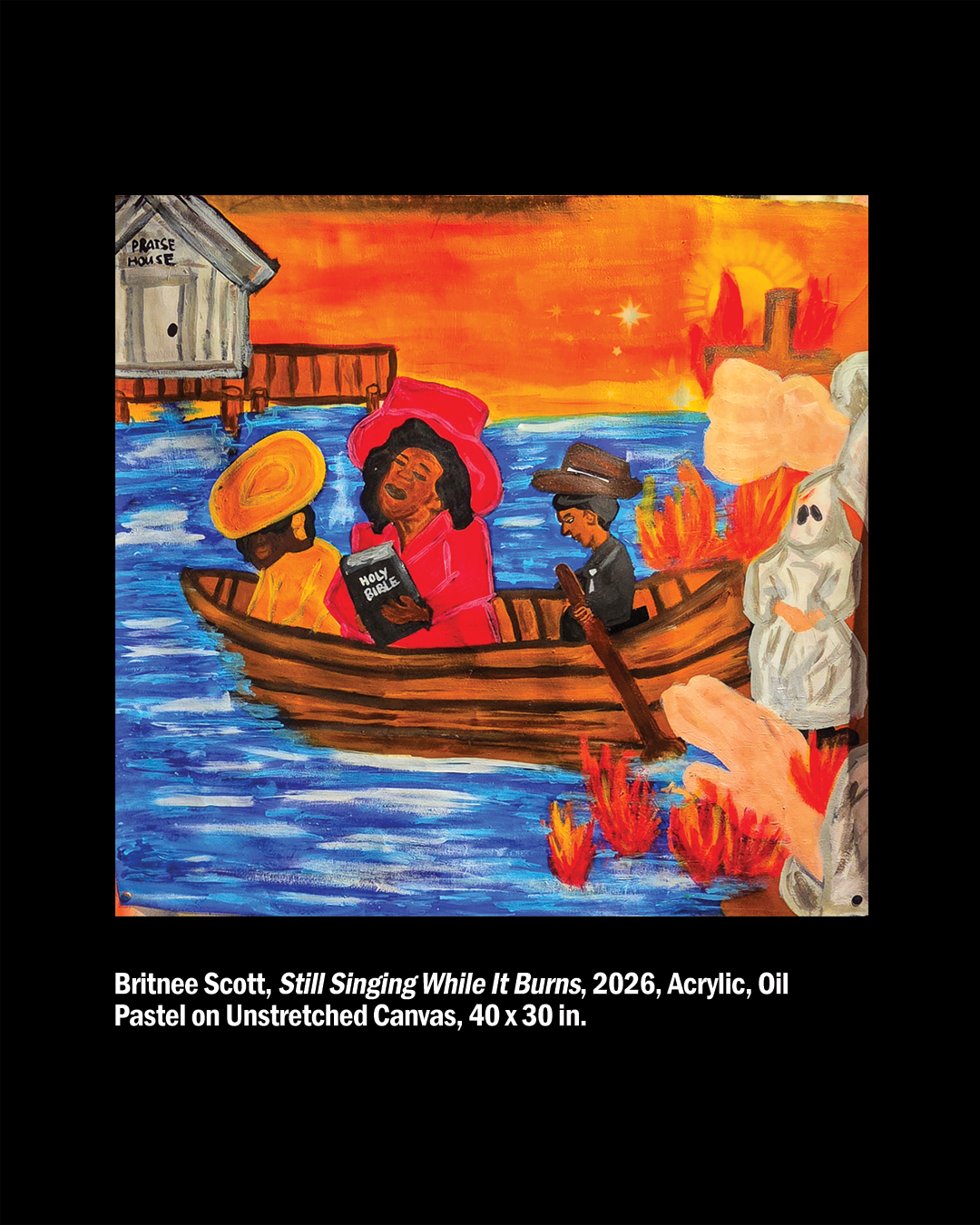 Image 2 of 2
Britnee Scott
Still Singing While It Burns, 2026
Acrylic, Oil Pastel on Unstretched Canvas
101.6 x 76.2 cm (40 x 30 in.)
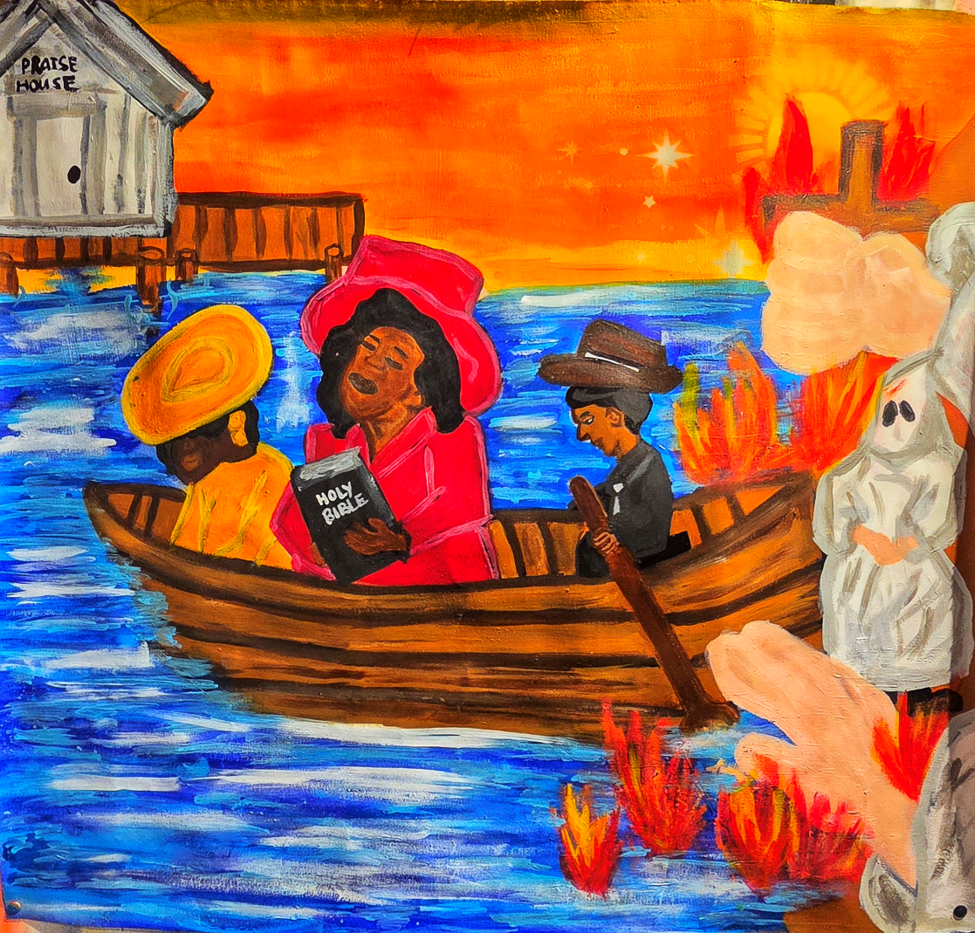
This piece carries a heavy, layered narrative—one that holds faith, history, survival, and contradiction all at once. At the center, a group travels across water in a small boat, evoking movement, migration, and endurance. The figure in red, eyes closed and holding a Bible, feels anchored in devotion—singing, praying, or holding onto belief as a source of strength. The surrounding figures suggest community, but also quiet tension—each person turned inward in their own way.
In the background, the “praise house” sits elevated above the water, hinting at tradition, refuge, and spiritual grounding. Yet on the right side, fire rises—bright, consuming, impossible to ignore. The presence of the hooded figure introduces a direct confrontation with historical violence and oppression, creating a stark contrast against the faith-centered imagery.
The composition creates a visual and emotional divide: water and worship on one side, fire and threat on the other. Yet they exist in the same space, suggesting that for many, faith and danger, hope and harm, have always coexisted.
Still Singing While It Burns speaks to resilience in the face of contradiction—the ability to hold onto belief, identity, and voice even when surrounded by forces meant to silence or destroy.
Britnee Scott
Still Singing While It Burns, 2026
Acrylic, Oil Pastel on Unstretched Canvas
101.6 x 76.2 cm (40 x 30 in.)
This piece carries a heavy, layered narrative—one that holds faith, history, survival, and contradiction all at once. At the center, a group travels across water in a small boat, evoking movement, migration, and endurance. The figure in red, eyes closed and holding a Bible, feels anchored in devotion—singing, praying, or holding onto belief as a source of strength. The surrounding figures suggest community, but also quiet tension—each person turned inward in their own way.
In the background, the “praise house” sits elevated above the water, hinting at tradition, refuge, and spiritual grounding. Yet on the right side, fire rises—bright, consuming, impossible to ignore. The presence of the hooded figure introduces a direct confrontation with historical violence and oppression, creating a stark contrast against the faith-centered imagery.
The composition creates a visual and emotional divide: water and worship on one side, fire and threat on the other. Yet they exist in the same space, suggesting that for many, faith and danger, hope and harm, have always coexisted.
Still Singing While It Burns speaks to resilience in the face of contradiction—the ability to hold onto belief, identity, and voice even when surrounded by forces meant to silence or destroy.